
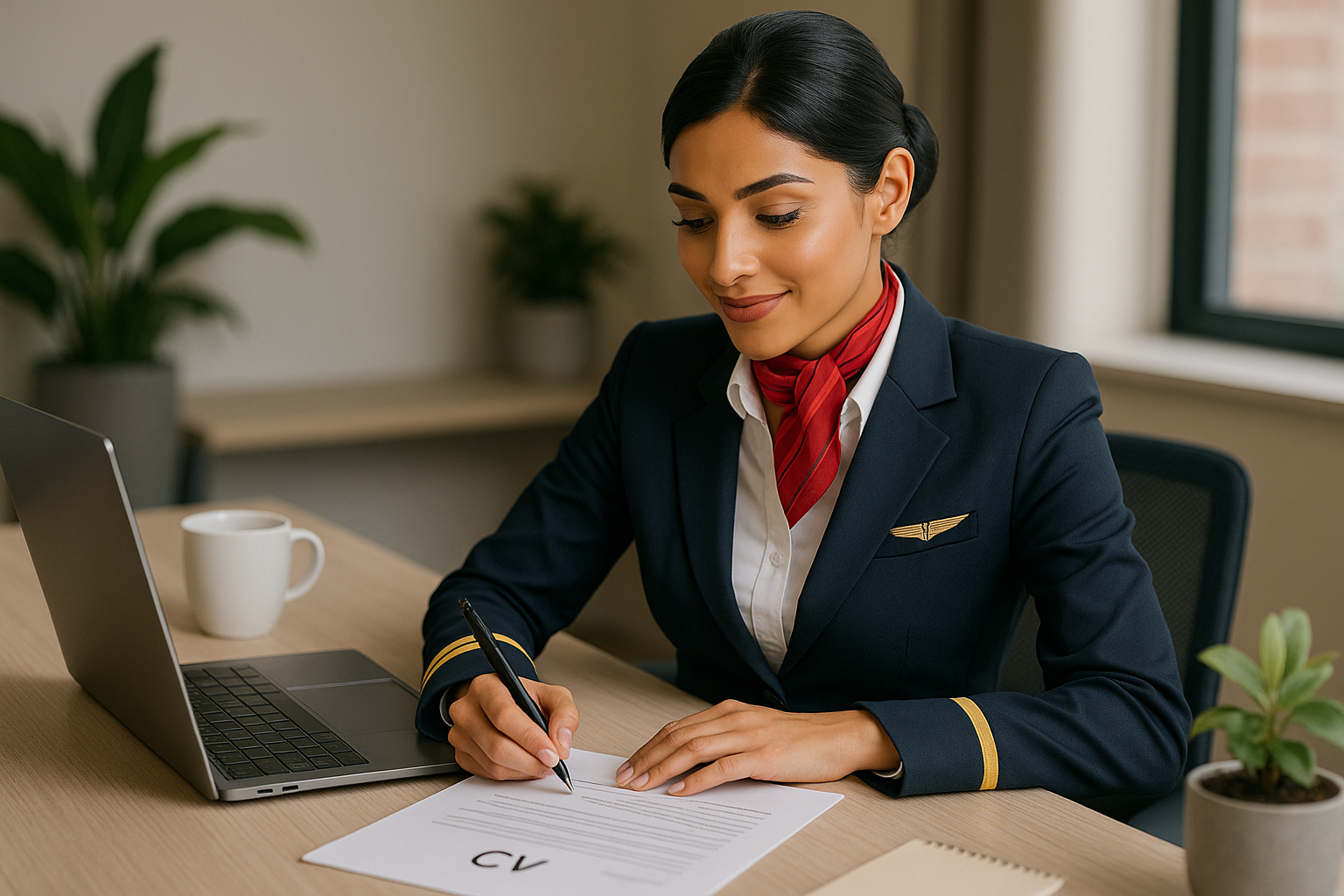
Whether you’re just starting your aviation journey or you’re an experienced professional with thousands of hours in the skies, your CV and cover letter are your boarding pass to new opportunities. Airlines and aerospace companies receive thousands of applications every month, and the competition is fierce. A well-crafted CV and cover letter will help you stand out—whether you’re applying for your very first cabin crew role or aiming for a senior captain or engineering position.
In this guide, we’ll show you exactly how to create a CV and cover letter that recruiters in aviation want to read. At the end, you’ll also find free downloadable templates in Word that you can adapt to your own career.
Why Aviation CVs and Cover Letters Are Different
Aviation is unlike any other industry. Safety, precision, and professionalism are non-negotiable. That’s why recruiters in this sector look for:
-
Clear and structured formatting – no clutter, no gimmicks.
-
Proof of qualifications and training – licenses, type ratings, language certifications, and technical skills.
-
Evidence of soft skills – teamwork, cultural awareness, customer service, leadership.
-
Commitment to safety and compliance – a theme that should run through both CV and cover letter.
CV Best Practices for Aviation Jobs
No matter your role, follow these golden rules:
-
Keep it 2 pages maximum (1 page for entry-level).
-
Use a clean, professional font (Arial, Calibri, Helvetica).
-
Structure with clear sections: Personal Information, Profile, Experience, Education, Licenses & Certifications, Skills, Languages.
-
Highlight achievements with numbers (flight hours, passengers served, projects completed).
-
Tailor each CV to the specific airline, operator, or company.
Pilots: CV Tips
-
Include total flight hours, PIC hours, simulator time.
-
List type ratings and validity dates.
-
Mention safety record, training completions, special operations (e.g., ETOPS, low-visibility).
-
Show leadership: mentoring cadets, teamwork in multi-crew environments.
Cabin Crew: CV Tips
-
Emphasize customer service experience (even outside aviation).
-
Highlight languages spoken and cultural adaptability.
-
Add safety training certificates and first aid knowledge.
-
Mention teamwork and conflict resolution—airlines value this as much as appearance and presentation.
Aerospace Engineers & Ground Staff: CV Tips
-
Focus on technical certifications and licenses.
-
Show experience with specific systems, tools, or aircraft types.
-
Mention compliance knowledge (EASA Part-66, FAA, etc.).
-
Use examples of problem-solving under pressure—a critical skill on the ground.
Cover Letter Essentials
Your cover letter should be short, tailored, and professional:
-
Opening: Express enthusiasm for the airline/company.
-
Middle: Show how your skills and experience match the role.
-
Closing: Confidently state your motivation and invite further discussion.
Example for a Young Candidate (Cabin Crew)
“As a recent graduate with a passion for aviation and customer service, I am eager to bring my multilingual skills and positive energy to [Airline Name]. I am confident that my dedication and adaptability make me a strong fit for your cabin crew team.”
Example for an Experienced Candidate (Pilot)
“With over 8,500 flight hours on Airbus A320 family aircraft and a proven record of safe and efficient operations, I am excited to bring my experience and leadership skills to [Airline Name]. I am particularly drawn to your reputation for operational excellence and pilot development.”
Free Downloadable Templates
To save you time, we’ve prepared professional Word templates for:
-
Pilot CV + Cover Letter
-
Cabin Crew CV + Cover Letter
-
Aerospace Engineer CV + Cover Letter
-
Ground/Operations Staff CV + Cover Letter
[Download Templates Here – Coming Soon]
Final Thoughts
Whether you’re just entering the aviation world or looking to take the next step in a long career, your CV and cover letter are key to opening new doors. Use this guide, adapt the templates, and remember: every great aviation career starts with a strong first impression.
Now it’s time to polish your documents and get ready for take-off. Good luck!